
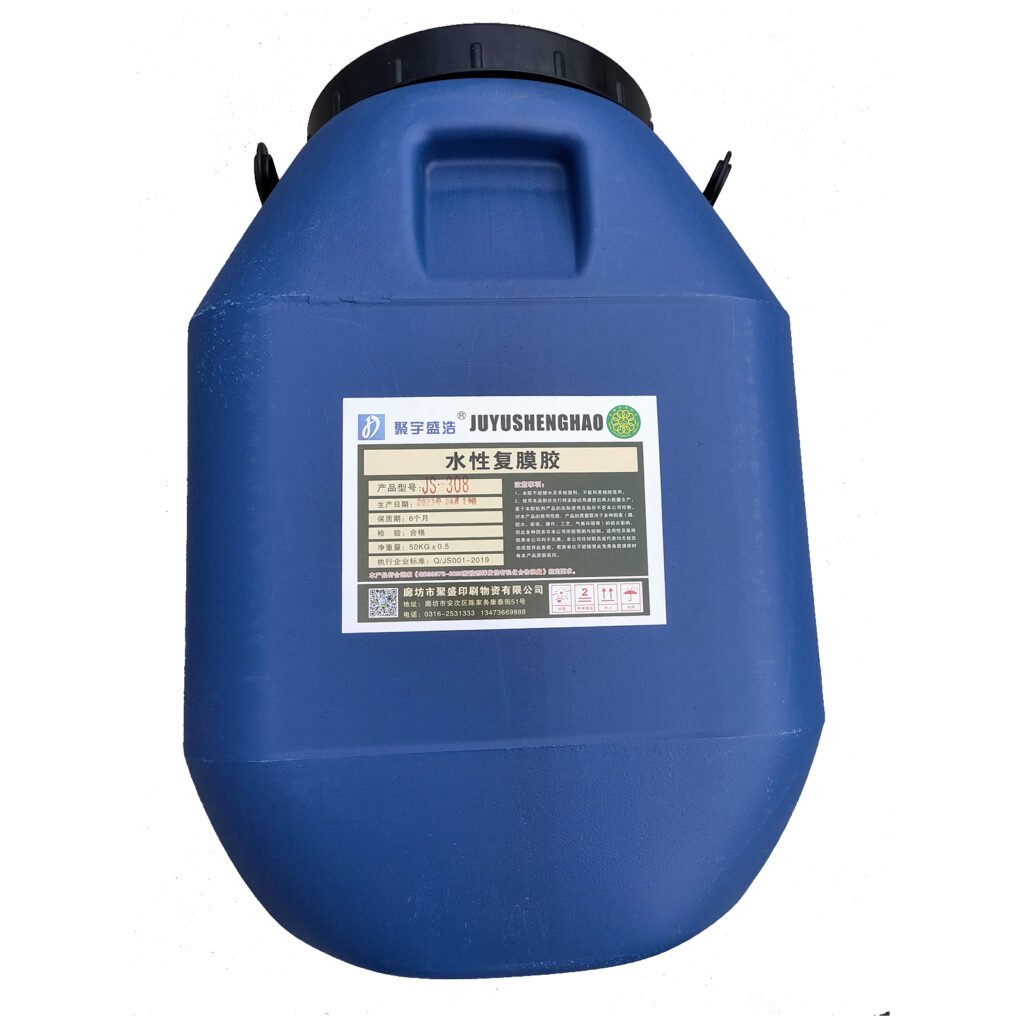
In the printing and packaging industry, lamination is a critical post-press process that enhances the durability, aesthetic appeal, and functional performance of printed materials. This process involves bonding a thin plastic film to a printed substrate using an adhesive. The choice of adhesive is paramount, primarily between water-based and solvent-based (or oil-based) variants. Understanding the fundamental differences between these two types is essential for printers to make informed decisions that align with their project requirements, environmental policies, and operational constraints.
The most significant distinction lies in their chemical composition and mechanism of drying. Solvent-based adhesives are formulated with synthetic polymers dissolved in volatile organic compounds (VOCs) as carriers. During the lamination process, heat is applied to evaporate these solvents, leaving behind a solidified adhesive layer that creates a strong, permanent bond. Conversely, water-based adhesives utilize water as their primary carrier. The bonding is achieved when the water content evaporates (through absorption into the substrate and evaporation via heat), allowing the acrylic or polyurethane polymers to coalesce and form the adhesive film.
This core difference in composition leads to a direct impact on health, safety, and environmental compliance. Solvent-based adhesives emit high levels of VOCs during drying. These emissions contribute to air pollution, can form ground-level ozone, and pose significant health risks to operators, including respiratory problems and neurological effects. Consequently, their use often requires expensive explosion-proof ventilation systems and incineration equipment to meet stringent environmental regulations. Water-based adhesives, on the other hand, have minimal VOC emissions, making them a much safer option for the workplace and far more environmentally friendly. They align perfectly with the global push towards sustainable and greener manufacturing practices.
Performance characteristics also vary. Traditionally, solvent-based adhesives were praised for their superior initial tack, excellent wetting properties on a variety of substrates (especially low-energy films and certain inks), and high resistance to water and chemicals. They often performed well in high-speed laminating operations. However, advancements in water-based technology have dramatically closed this performance gap. Modern water-based adhesives offer strong bonding strength, excellent clarity, and good resistance properties. Nevertheless, they can sometimes be sensitive to application conditions, requiring more precise control of viscosity and drying parameters to prevent issues like blistering or poor adhesion on non-porous substrates.
Operational and economic factors further differentiate them. While the per-kilogram cost of solvent-based adhesive might be lower, the total cost of ownership is often higher due to the substantial investments in environmental controls, higher energy costs for solvent incineration, and insurance premiums. Water-based systems typically have a simpler and cheaper installation, with no need for solvent recovery or complex ventilation. However, they may require longer drying tunnels or more energy for water evaporation, which can affect production speed.
In conclusion, the choice between water-based and solvent-based lamination adhesives is a strategic one. Solvent-based variants, though historically dominant for their robust performance, are increasingly being phased out due to their environmental and health drawbacks. Water-based adhesives represent the modern, sustainable choice, offering a safer working environment and compliance with regulations without a substantial sacrifice in performance. For most printers today, adopting high-quality water-based technology is not just an operational decision but a commitment to a greener future.
